

BI & Analytics
Data Governance in the Age of AI:
Who Watches the Algorithms?
Read Time : 4 min
Author : Satheesh Reddy S
Download PDFIf AI makes a business decision, who is responsible when that decision is wrong?
AI is rapidly becoming part of how enterprises operate and make
decisions.
From customer intelligence and employee analytics to financial forecasting and operational planning, AI is
influencing outcomes that directly impact the business.
But as AI takes on a larger role, governance needs to evolve with it.
Traditional data governance focused on protecting and managing data who can access it, where it comes
from, how it is classified, and whether it can be trusted.
AI governance goes one step further: it governs how AI uses that data, how it behaves, and how its
outputs are acted upon.
When Data Becomes a Decision
The quality of an AI decision is closely connected to the quality of the data behind it.
Incomplete, outdated, inconsistent, or poorly governed data can lead AI systems to generate inaccurate
recommendations. When those recommendations feed into business processes, a data-quality issue can
quickly become a business risk.
Consider an AI system generating a customer-risk recommendation. If the underlying customer information
is incomplete or outdated, the recommendation may appear intelligent while being fundamentally wrong.
This creates a critical governance chain:
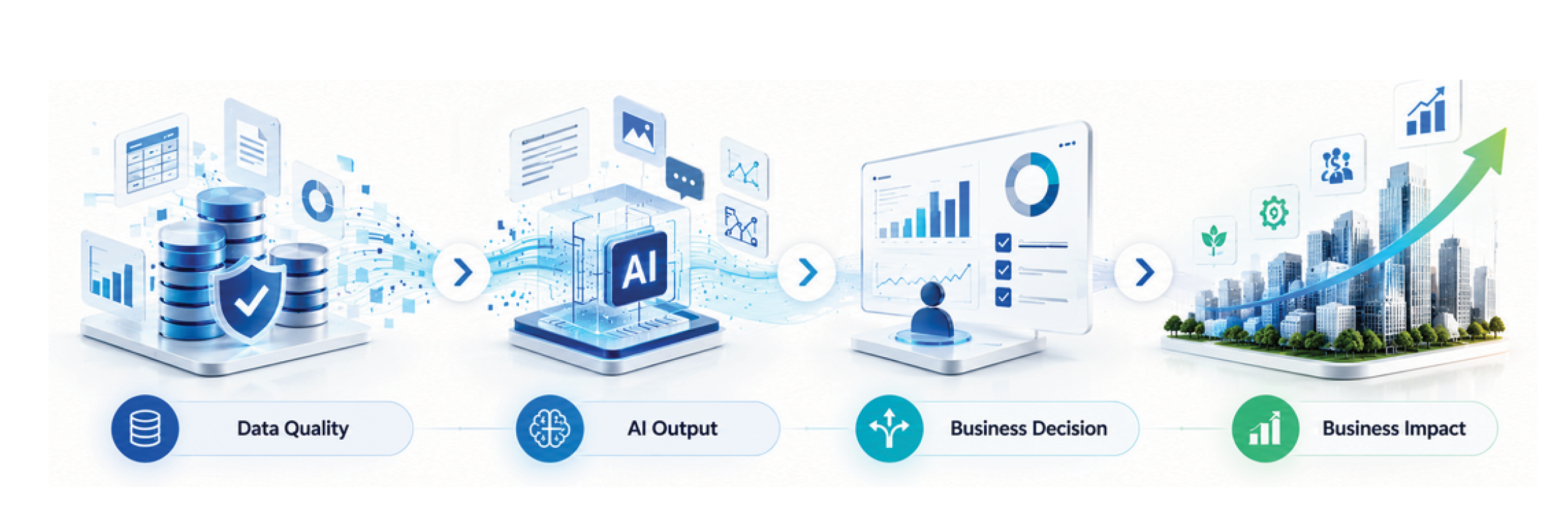
Governance must therefore extend beyond the data layer to the decisions that data enables.
The Hallucination Challenge
Generative AI introduces another layer of risk: hallucinations.
AI can produce information that sounds confident and convincing while being factually incorrect. In an
enterprise environment, this can create significant operational, financial, customer, and compliance risks.
The answer isn't to avoid AI.
It is to establish controls around how AI-generated information is validated, used, shared, and acted upon.
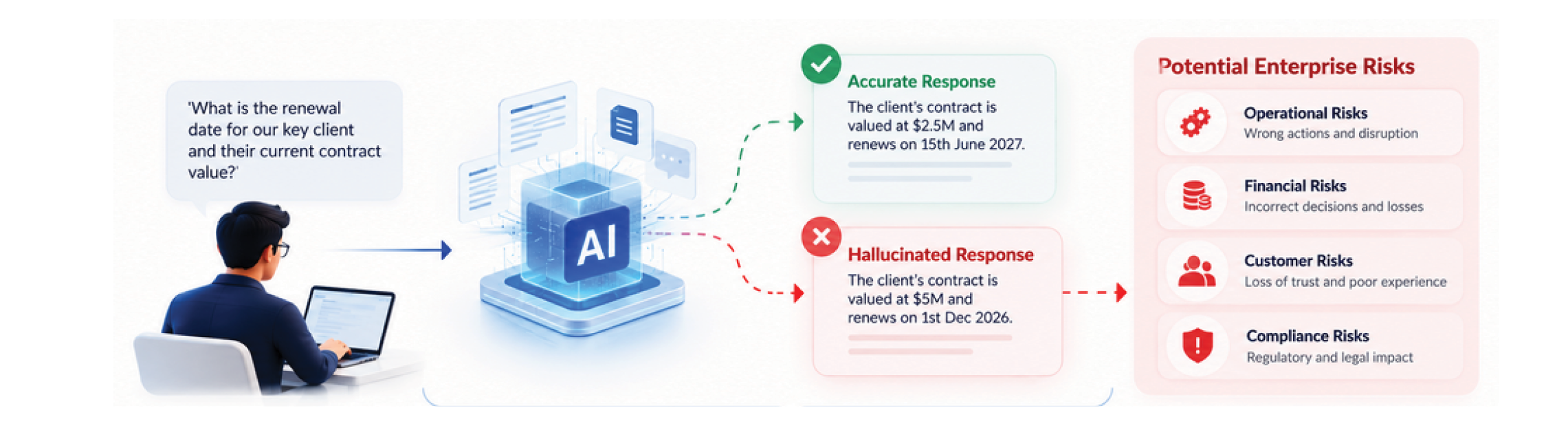
Organizations need to know whether an AI-generated insight is supported by reliable information and
whether it is appropriate to use that insight for a particular business decision.
This makes governance an essential part of enterprise AI adoption not a separate compliance exercise.
Data Lineage: Knowing Where the Insight Came From
When an AI system produces an insight, organizations should be able to trace it back to its source.
Data lineage provides that visibility.
It helps establish the relationship between the original data, transformations, analytical processes, and the
resulting AI-generated insight.
For enterprises, this means moving from:
“AI gave us this answer.”
to:
“We know where this answer came from.”
That distinction becomes increasingly important when AI-generated outputs influence financial decisions,
customer interactions, operational processes, or regulatory reporting.
Access Control Must Follow the Data
AI can potentially interact with large volumes of enterprise
information. That makes permissions and access controls critical.
An AI application should not automatically have access to every
dataset simply because that information exists within the
organization.
Strong governance ensures that AI users and systems can access
only the information they are authorized to use.
The principle is straightforward:
AI should have access to the right data—not unlimited data.
Explainability Builds Confidence
An AI-generated recommendation is only as useful as an organization's ability to understand it.
Explainability helps answer the “why” behind an AI output.
Why was this recommendation generated?
What information influenced the result?
Can the business user understand the reasoning well enough to validate and act on it?
For enterprise AI, explainability should be considered from the beginning rather than introduced after an
issue occurs.
When AI influences decisions involving customers, employees, finances, or operations, organizations need
more than an answer.
They need context around that answer.
Accountability Cannot Be Delegated to an Algorithm
One of the most important questions in AI governance is also the simplest:
Who owns the decision?
AI may generate a recommendation, but accountability remains an organizational responsibility.
Every AI-driven decision should have clear ownership across its lifecycle—from data collection and model
development to the final output and business action.
Clear ownership ensures that when an AI system produces an unexpected result, there is a defined process
for reviewing, correcting, and addressing it.
The algorithm can support the decision.
It cannot own the consequence.
Governance Must Be Continuous
AI governance does not end when a model goes live.
Data changes. Business conditions change. Models evolve. User behavior changes.
Continuous monitoring is therefore essential to identify:
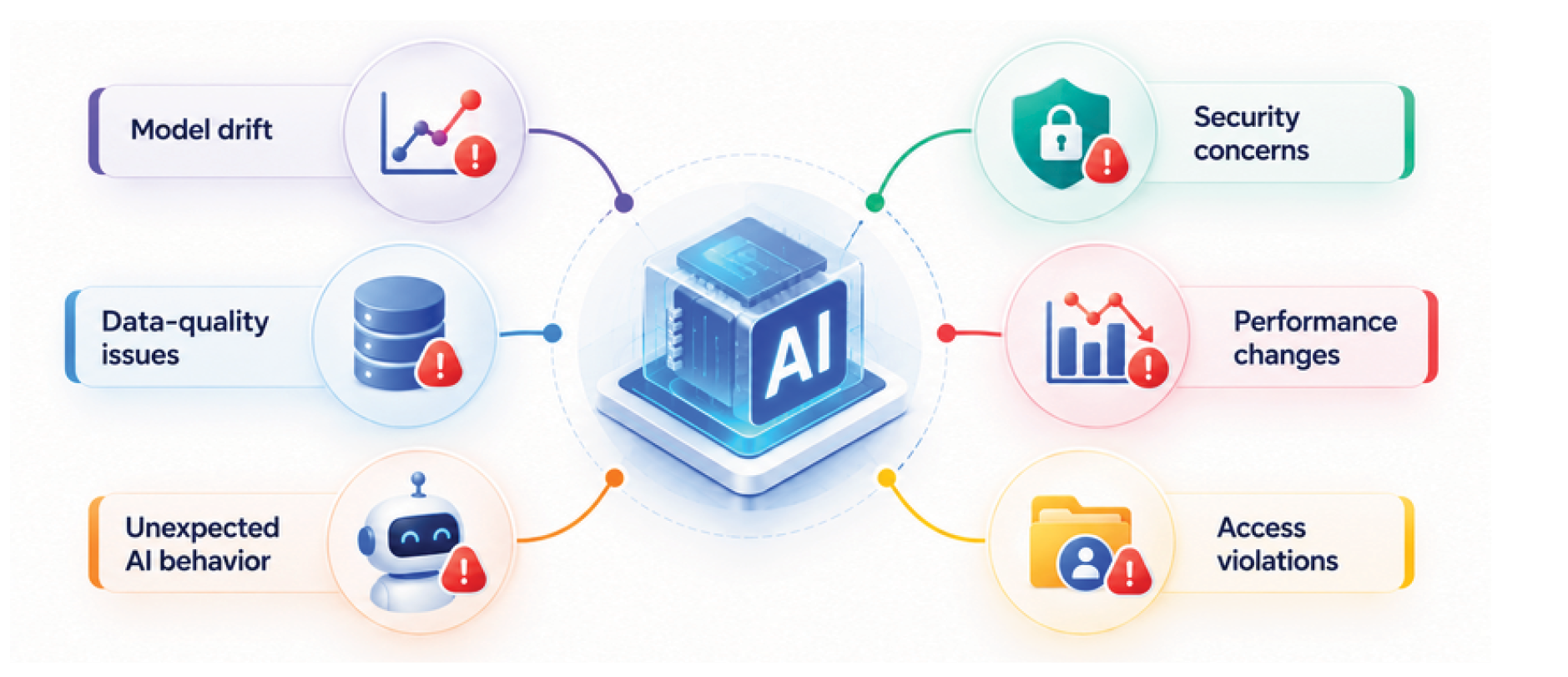
Monitoring allows organizations to identify issues before they become larger business problems. This transforms governance from a one-time checkpoint into an ongoing capability.
Making AI Trustworthy at Enterprise Scale
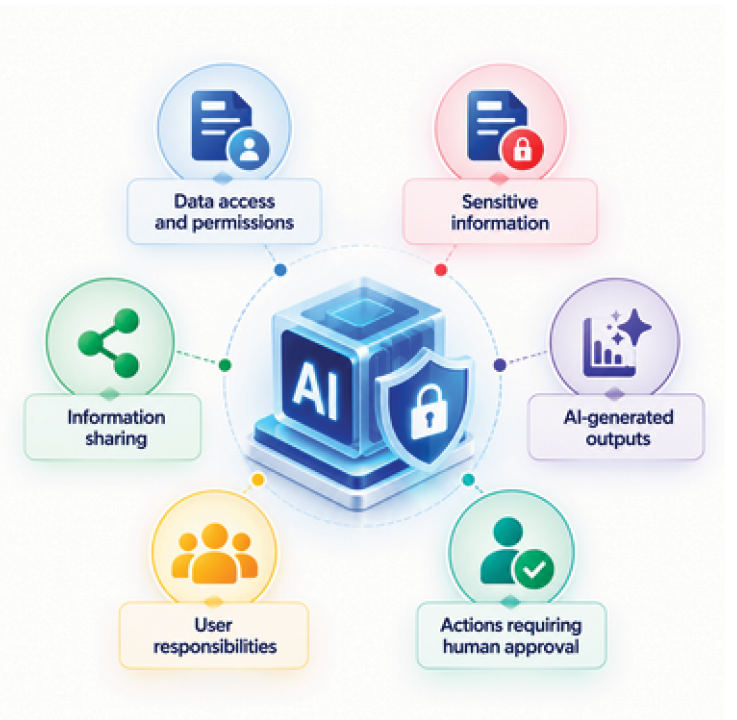
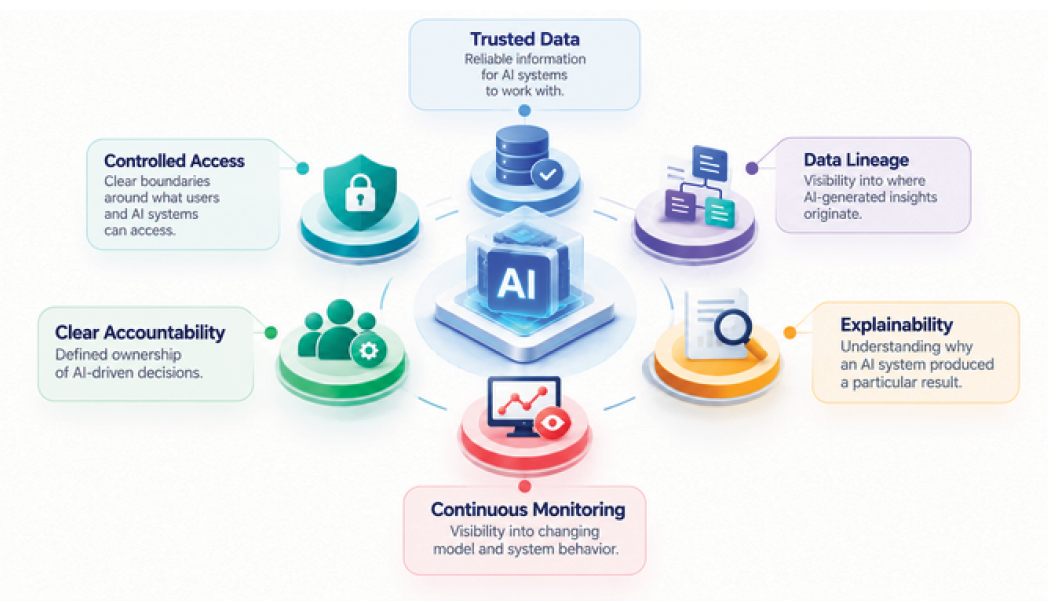
Effective AI governance brings together several foundations:
Together, these create the foundation for AI that
organizations can confidently integrate into their business
processes.
Good AI governance is not about slowing AI down.
It is about making AI trustworthy, accountable, and safe to
scale.
AI will continue to influence more enterprise decisions. The
real test is whether organizations can explain, monitor, and
defend those decisions when it matters.
HOW AION-TECH SOLUTIONS BUILDS TRUST INTO ENTERPRISE AI
At AION-TECH SOLUTIONS, we see responsible AI as an extension of strong data and analytics foundations
bringing together governed data, intelligent systems, and accountable decision-making to help enterprises
scale AI with confidence.
Because the future of AI isn't just about smarter algorithms. It's about building the governance to trust them.
CONCLUSION
AI is already influencing critical business decisions. The question is no longer whether enterprises will use AI,
but whether they can trust, explain, and take responsibility for its outcomes.
Strong AI governance brings together trusted data, clear lineage, controlled access, explainability,
continuous monitoring, and defined accountability to create the foundation for responsible AI adoption.
At AION-TECH SOLUTIONS, we believe governance should enable AI not slow it down. By building the right
data and governance foundations, enterprises can move from experimenting with AI to scaling it with
confidence, control, and accountability.
Because smarter AI is only valuable when organizations can trust the decisions it helps make.
Request for Services
Find out more about how we can help your organization navigate its next. Let us know your areas of interest so that we can serve you better