

BI & Analytics
Explainability in BI:
Why Clarity Matters More Than Accuracy Alone
Read Time : 4 min
Download PDFAdvanced analytics has evolved significantly, enabling organizations to predict outcomes and recommend actions with precision. Yet, Business Intelligence adoption continues to face a critical challenge not accuracy, but lack of clarity behind insights.
The issue is not the availability of data or sophistication of models, but the lack of clarity behind the insights being generated. When an insight appears whether a forecast shift or risk spike the first question is always: “Why did this happen?”
If that answer isn’t immediate, decisions are delayed, trust drops, and insights go unused.
The Problem Most BI Leaders Don’t Talk About
Business Intelligence today is more powerful than ever, capable of delivering predictive and prescriptive insights at scale. Yet, there exists a silent gap between insight generation and decision-making. This gap is rooted in the absence of explainability. While organizations invest heavily in analytics platforms, the ability of business users to trust and act on those insights remains limited. This creates a scenario where insights exist but are underutilized, ultimately impacting the speed and effectiveness of decision-making across the organization.
When insights lack explanation, this is what happens
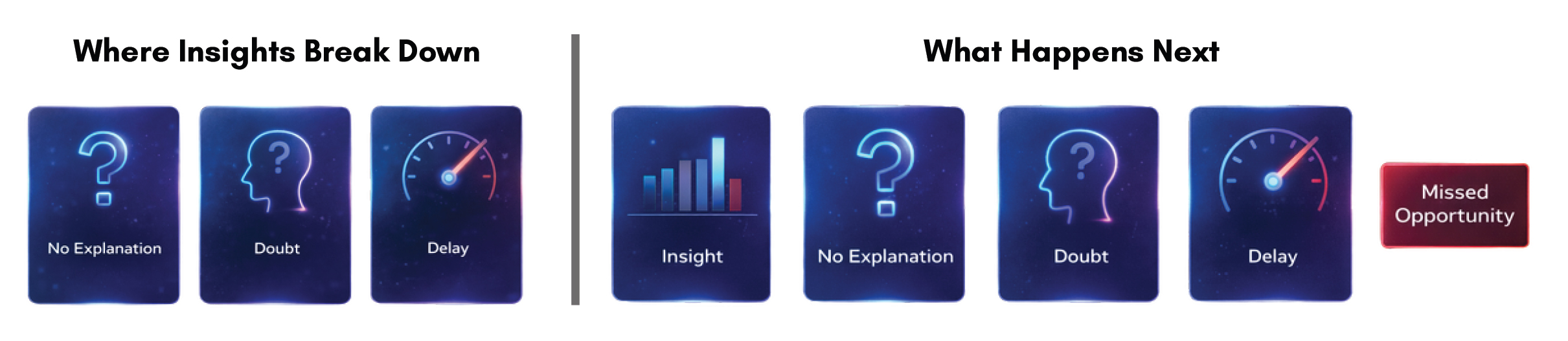
Where Traditional BI Starts Falling Short
Traditional BI systems are fundamentally designed to present outcomes rather than explanations. They effectively communicate what has changed, how much it has changed, and where the change has occurred. However, they rarely provide clarity on the underlying causes, the key contributing factors, or whether the change is temporary or structural. This limitation forces teams to manually validate insights by going back to raw data, which not only slows down the decision-making process but also reduces confidence in the analytics system. As a result, the very purpose of real-time BI—enabling faster and smarter decisions—is compromised.
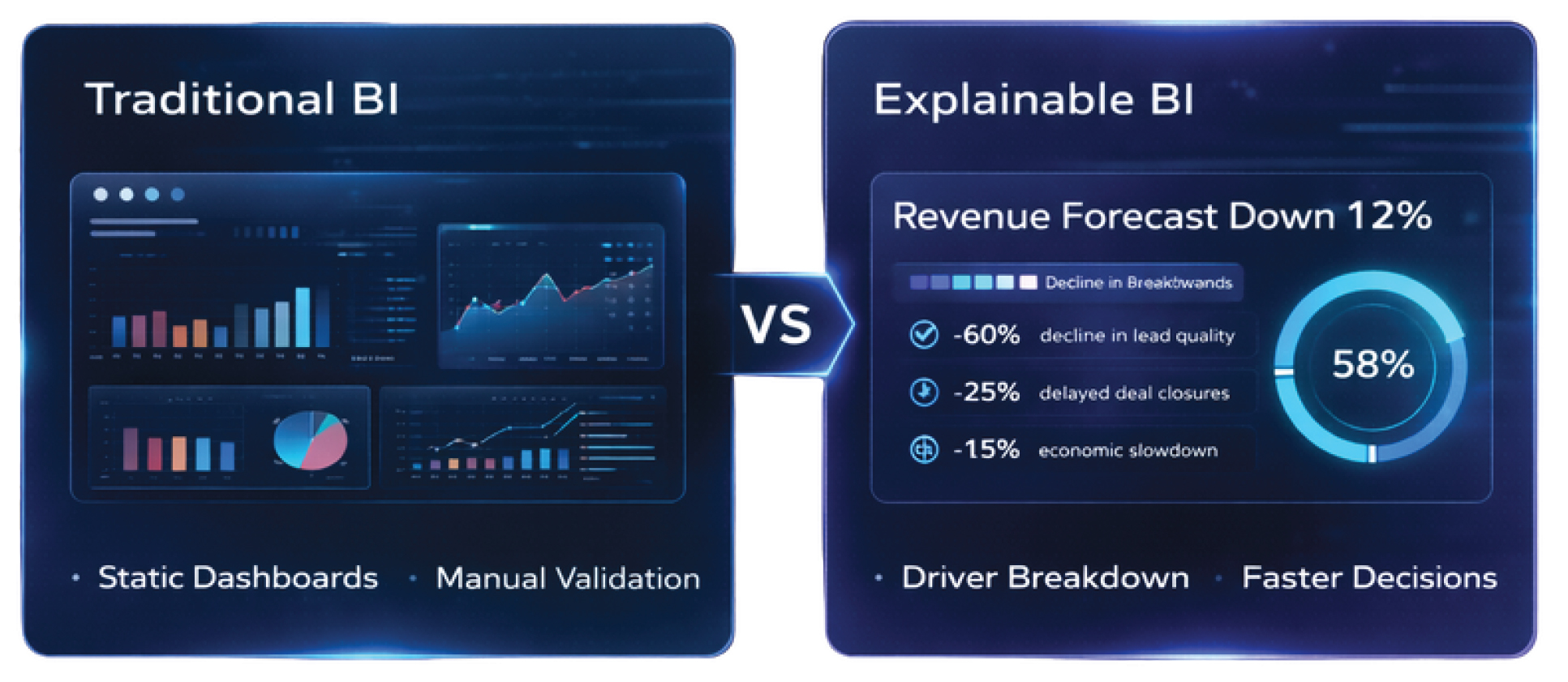
What Explainability Actually Means in Practice
Explainability ensures every insight answers “why” alongside “what.” It adds context that turns analysis into action. For instance, instead of simply stating that pipeline conversion is expected to decline, an explainable system highlights the contributing drivers, such as changes in customer segments, variations in lead quality, or shifts in sales cycle duration. This additional layer of context transforms insights into actionable intelligence, enabling business users to move from observation to decision with confidence.
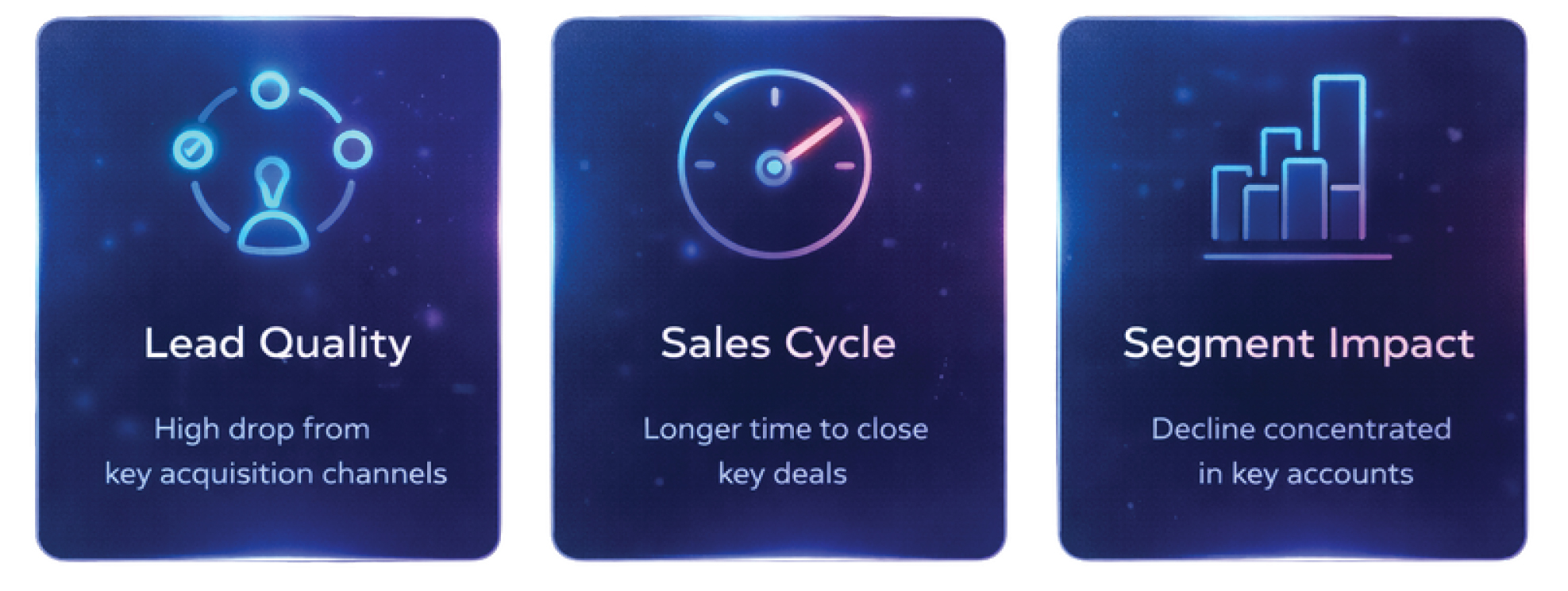
The value of explainability becomes clear when applied to real business scenarios.
Consider a fast-growing organization experiencing an unexpected drop in forecasted
revenue.
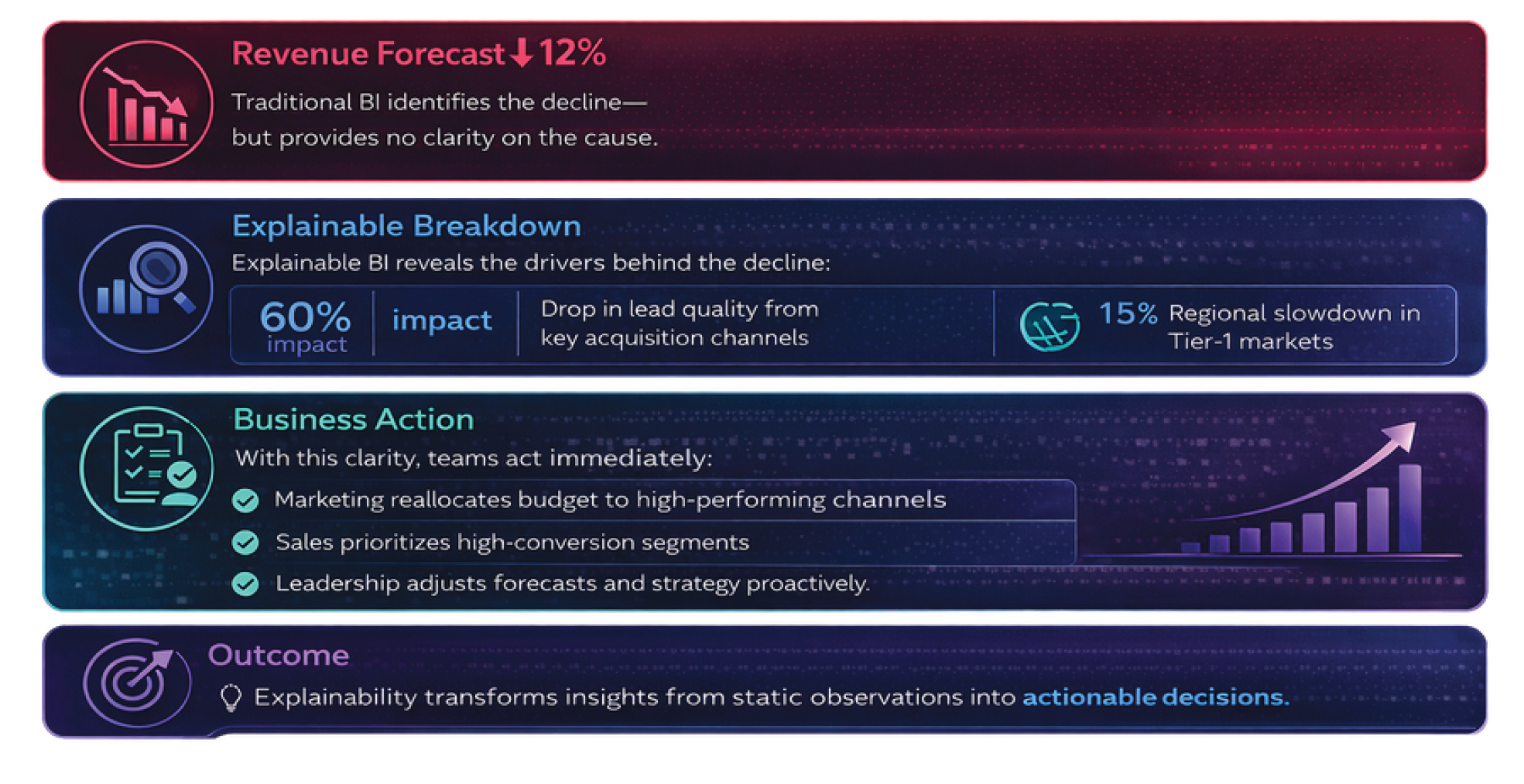
Bringing Transparency into AI-Driven BI
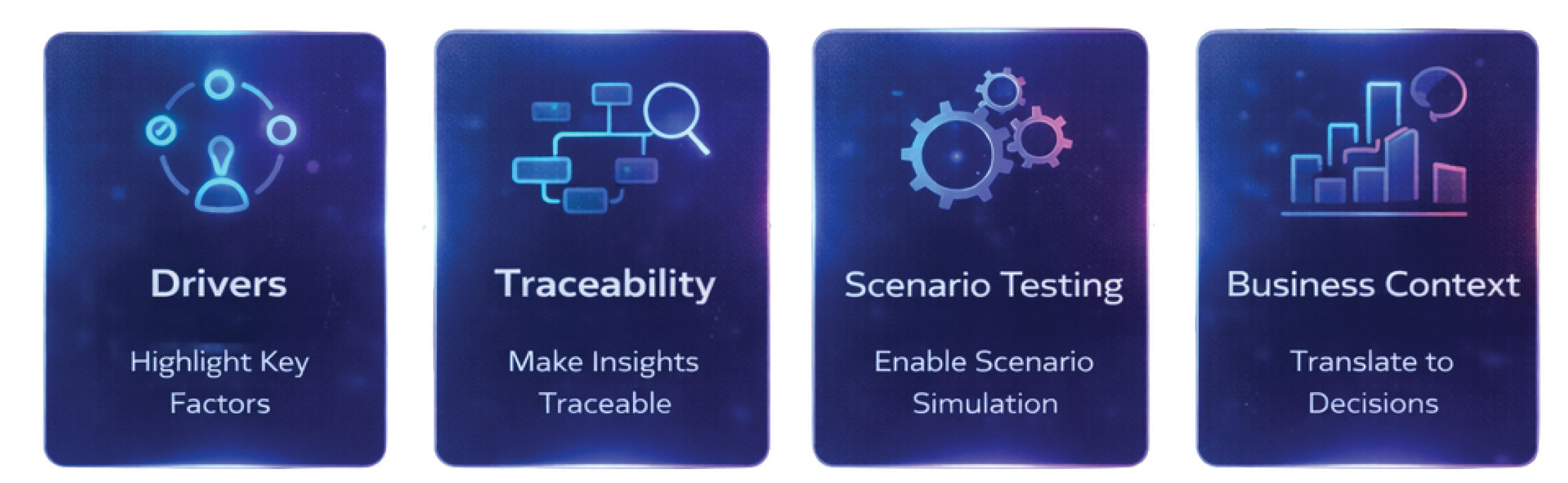
Explainability brings transparency into AI-driven BI through four key layers:
This is where explainability starts delivering measurable business impact
Where Explainability Creates Immediate Impact
The impact of explainability can be seen across multiple business functions. In forecasting, it enables early detection of trends and supports proactive decision-making. In recommendation systems, it increases adoption by providing clarity behind suggested actions. In exception monitoring, it accelerates root cause identification, allowing teams to respond more effectively to anomalies. Across these areas, explainability reduces decision latency and enhances overall operational agility, making organizations more responsive and data-driven.
Moving from Insight to Confidence
Organizations that adopt explainable BI move beyond simply generating insights to
truly trusting and acting on them. This transition is critical for scaling
data-driven decision-making. As explainability becomes
embedded within BI systems, decision cycles become faster, escalations reduce, and
alignment across teams improves. Business users gain confidence in the insights they
consume, enabling a more cohesive and
proactive approach to decision-making.
This is where explainability starts delivering measurable business impact:
What Changes When BI Becomes Explainable
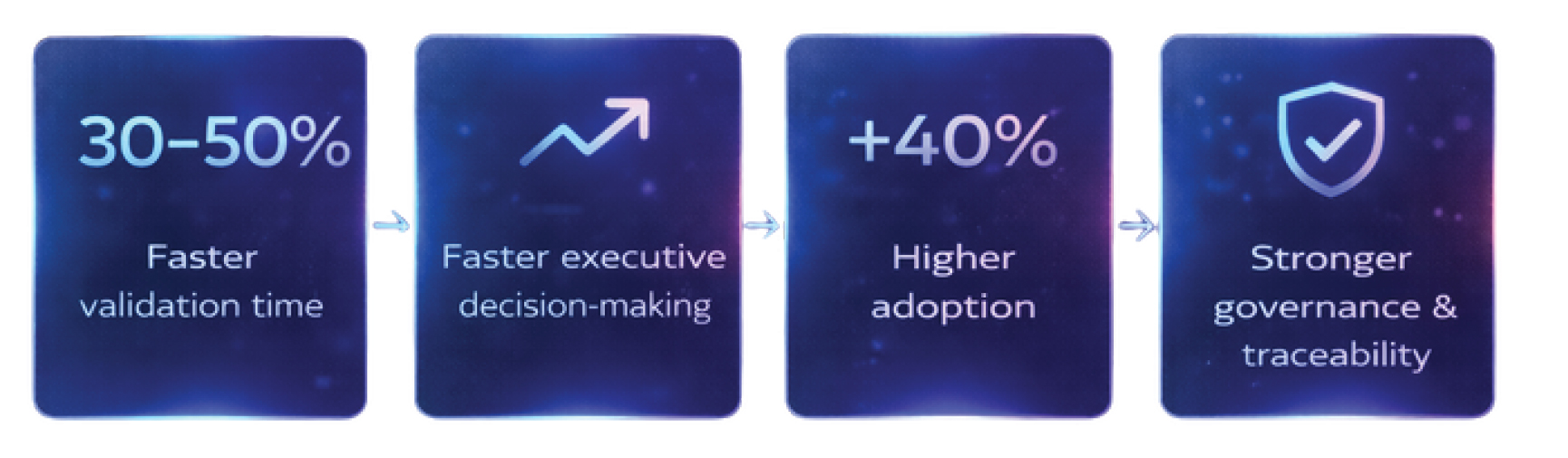
- Explainable BI shifts teams from validating insights to acting on them.
- Decisions become faster, trust in AI increases, and adoption improves.
- With full traceability, governance strengthens—ensuring every insight is reliable, transparent, and actionable.
Proven Impact
Organizations implementing explainable BI achieve faster analysis cycles, higher trust in AI-driven insights, and stronger alignment between business and data teams.
Conclusion
Organizations implementing explainable BI achieve faster analysis cycles, higher trust in AI-driven insights, and stronger alignment between business and data teams.
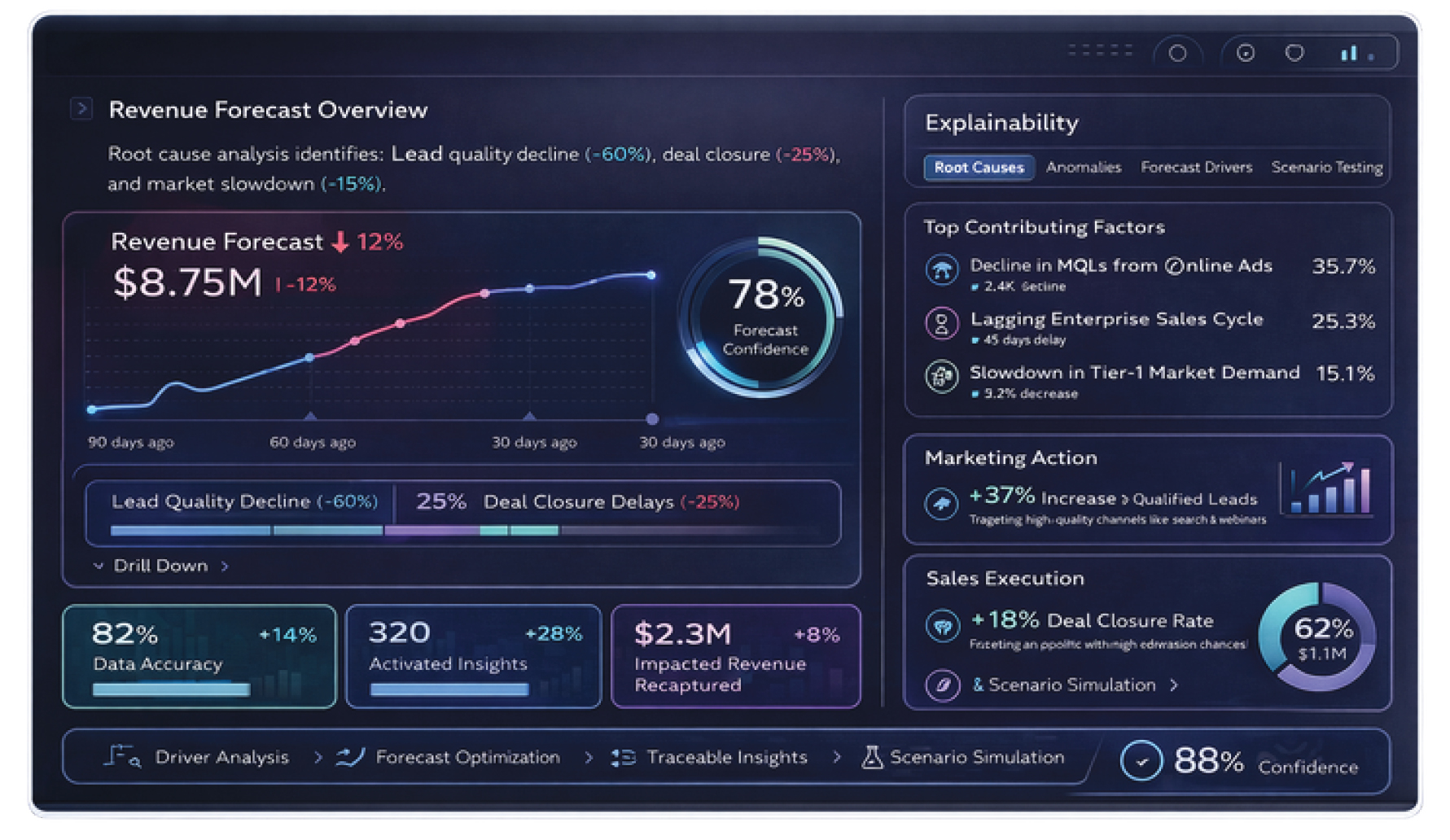
Illustrative view of explainable BI in action
Request for Services
Find out more about how we can help your organization navigate its next. Let us know your areas of interest so that we can serve you better