
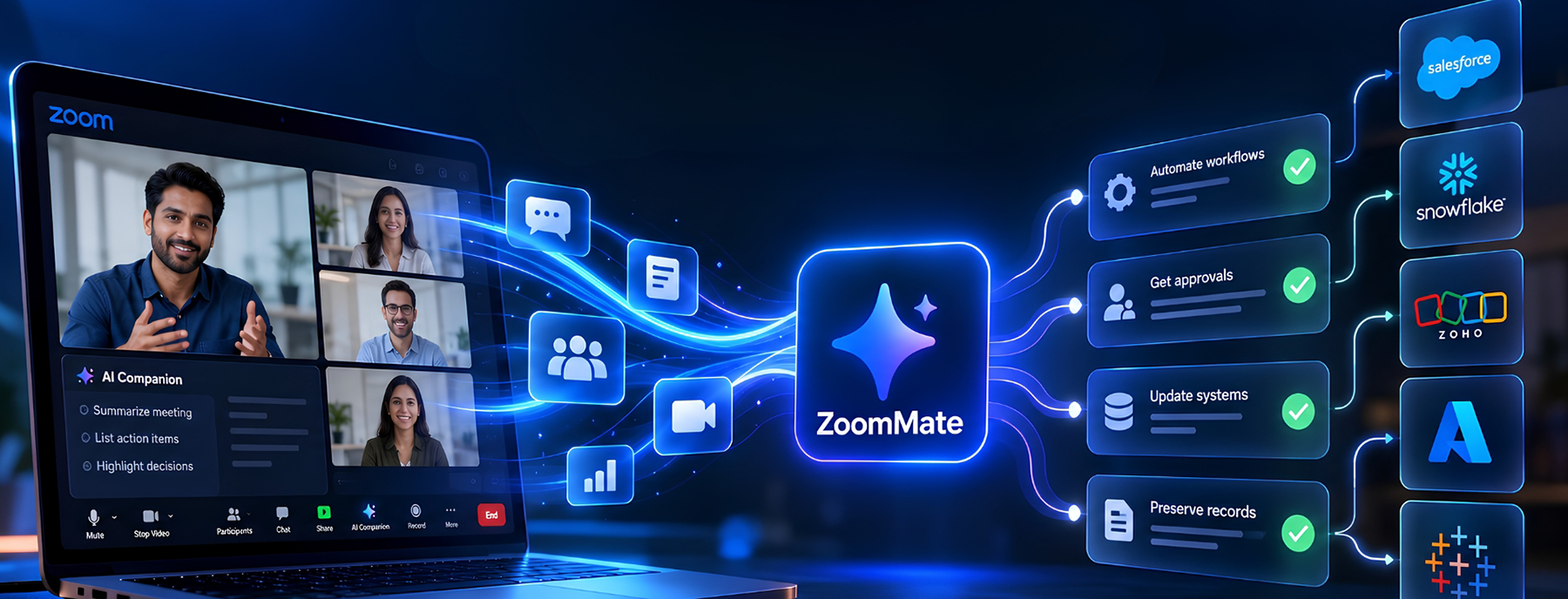
Enterprise Collaboration
From Conversation to Execution: Architecting Collaboration with ZoomMate
Read Time : 5 min
Author : Niyaz Wafar
Download PDF
What if every meeting could trigger meaningful business action?
Enterprise collaboration needs more than summaries.
Today's problem is not a shortage of communication tools; it is loss of
context between conversation and execution. A request made in Zoom
may still require manual CRM updates, owner assignment, follow-up
communications and scheduling.
The objective: connect interaction context to governed business workflows, rather than treating AI
summarization as the endpoint.
The Meeting Should Become a Business Event
Consider a buyer asking for 500 users, CRM integration and deployment next month. ZoomMate can help
extract the requirement, associate it with the account, classify the next action and route it through business
rules.
The desired result is not only a paragraph of notes: it is an actionable CRM record, accountable owner and
follow-up, with approval for sensitive operations.
The end-to-end enterprise workflow:
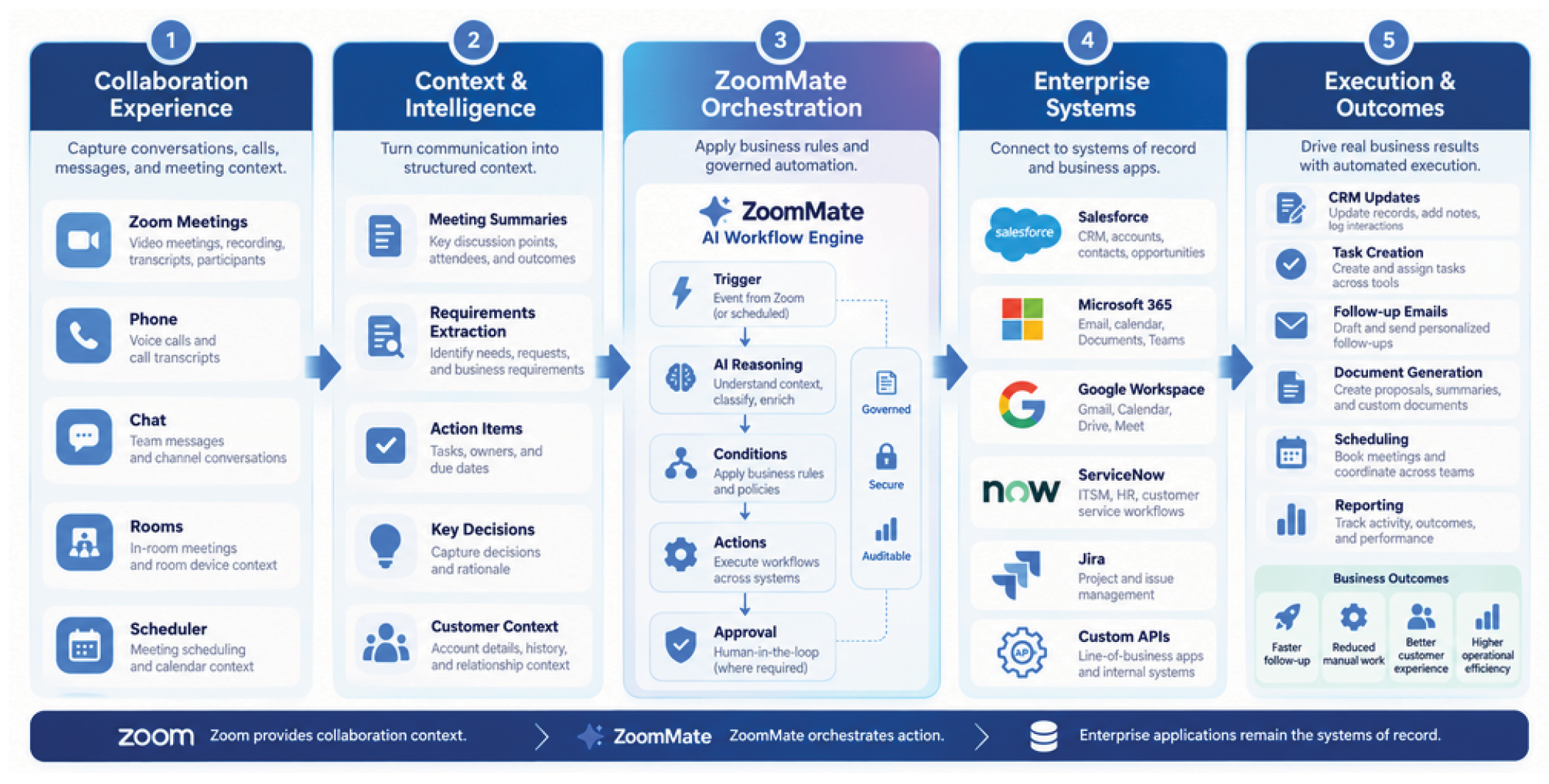
Zoom provides collaboration context; ZoomMate orchestrates action; business applications remain the systems of record.
Reference Architecture: Five Connected Layers
Experience: Zoom Meetings, Phone, Chat and Rooms capture interaction events. Intelligence: summaries, decisions, action items and requirements establish usable context. Orchestration: trigger → AI reasoning → conditions → actions → approval. Integration: APIs, webhooks and supported third-party connectors. Execution: CRM, task, document, scheduling and reporting updates.
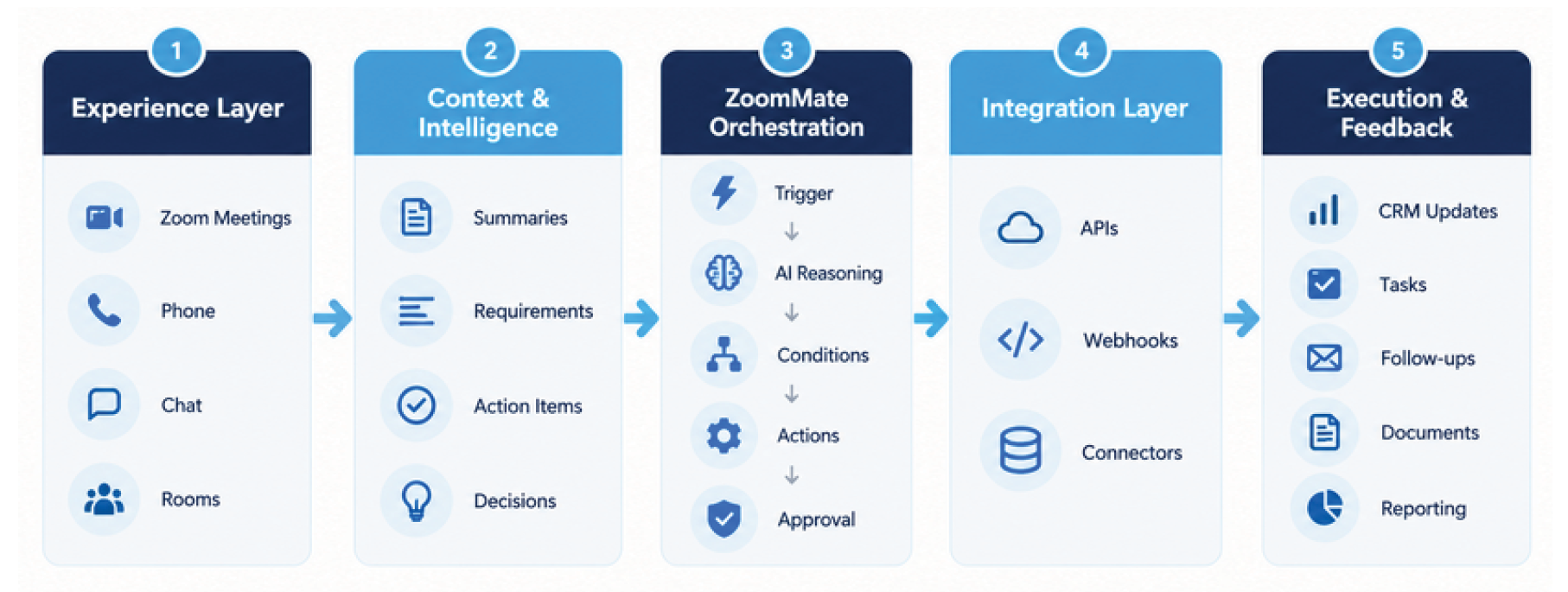
Design for clear responsibility and data ownership. External systems such as Salesforce, Microsoft, Google, ServiceNow and Jira remain authoritative; automations should record their outcomes and failures.
Zoom APIs & Webhooks: Event-Driven Design
Webhooks allow integrations to react when relevant Zoom events occur, without repeatedly polling the service.
The integration path
Zoom event → authenticated webhook endpoint → verification and enrichment → business logic →
ZoomMate or enterprise workflow → system-of-record update.
Use supported native workflow nodes first. Introduce custom APIs and webhooks when the customer's
requirements go beyond available connectors, and account for retries, access rights and duplicate events.
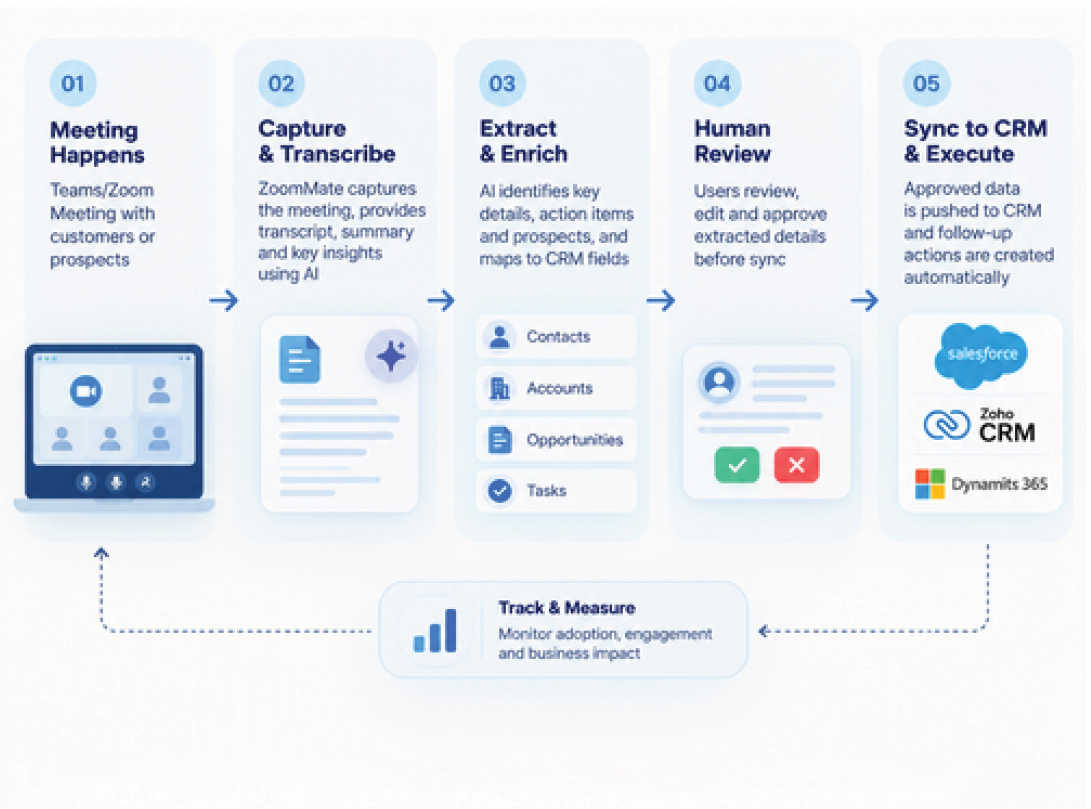
Use Case: Meeting to CRM Execution
Meeting context identifies the customer, decisions and
requirements. Business rules determine whether a qualified
opportunity should update the CRM and receive an owner,
or whether the request should become a follow-up task.
Generate a contextual response, seek approval when
needed and record the final status so the next customer
interaction starts with accurate context.
The design principle:
Automation executes repeatable work; people retain
control of high-impact decisions.
Zoom Phone → CRM → Follow-up
A completed customer call becomes an event delivered to the integration endpoint. The workflow matches
caller details to available customer data and checks relevant call context.
It then updates or associates the CRM record, assigns a sales follow-up and prepares a personalized
message. Sensitive external communication can pause for review before sending. Completion status and
exceptions are logged for the next interaction.
Governance: Human-in-the-Loop
Not every action should run without supervision.
Auto-execute: low-risk internal tasks, notifications and drafts.
Approval required: external messages, material CRM updates and commercial actions.
Human decision: ambiguous intent, ownership or sensitive business impact.
Embed the approval threshold in the workflow design, supported by clear ownership and auditable
outcomes.
Enterprise Controls & Implementation Roadmap
Apply least-privilege access, supported OAuth, clear data boundaries, human approval, exception
handling, observability and idempotency.
Implement in phases: Discover → Prioritize → Design → Prototype → Govern → Pilot → Scale.
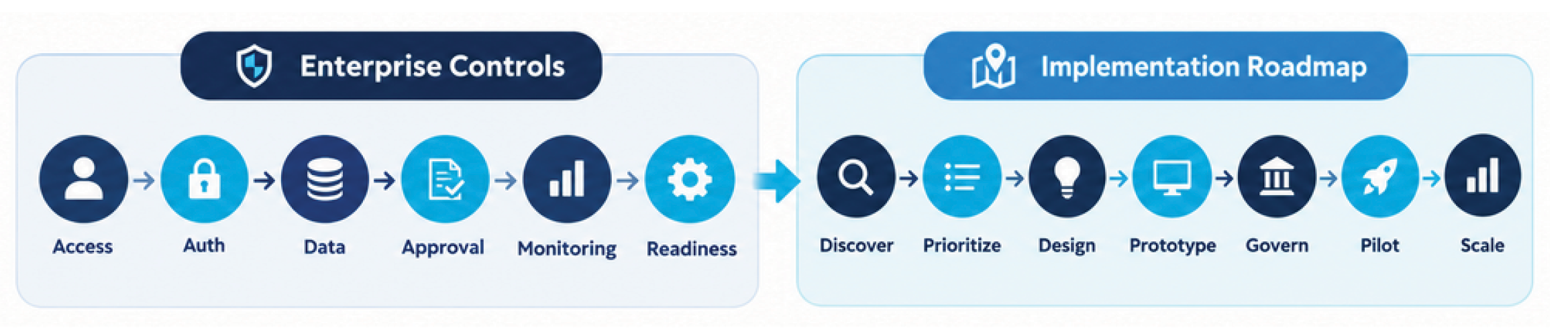
Begin with a narrow, measurable pilot; test success and exception paths, then expand only after accuracy, adoption and operational ownership are validated.
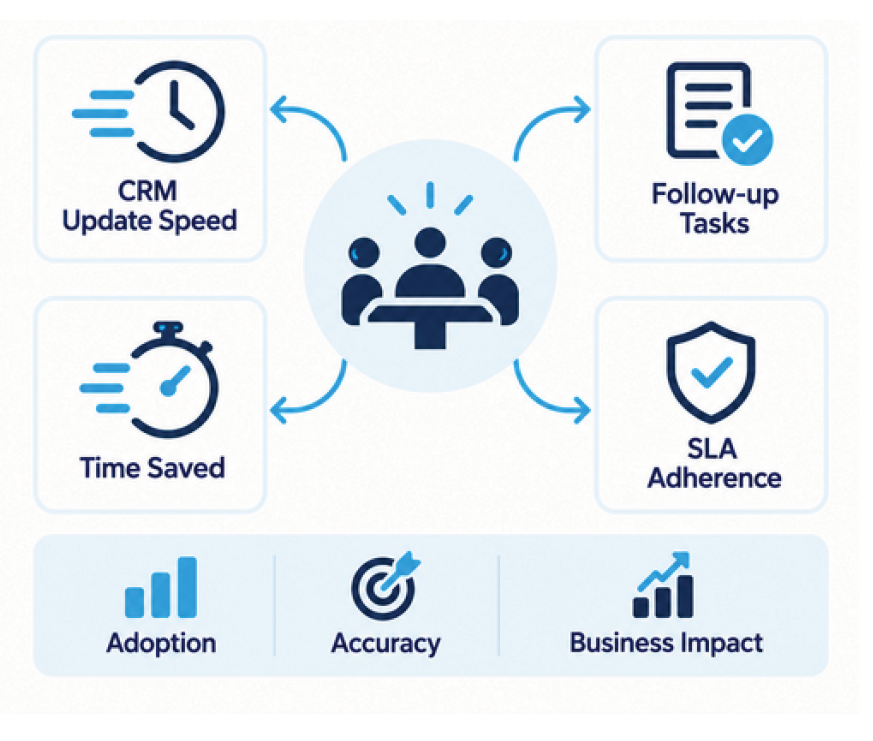
Measure What Happens After the Meeting
Track operational value, not simply AI activity: CRM update latency; automated follow-up task rate; reduction in manual entry; workflow success and exception rate; approval rate; duplicate-record rate; adoption; time saved per user; follow-up SLA adherence.
HOW AION-TECH SOLUTIONS ENABLES CONNECTED EXECUTION
AION-TECH SOLUTIONS helps enterprises connect collaboration workflows to core
systems with integration design, practical governance and measurable operational
outcomes.
The goal is not isolated AI features, but reliable processes that turn conversations
into accountable action.
CONCLUSION
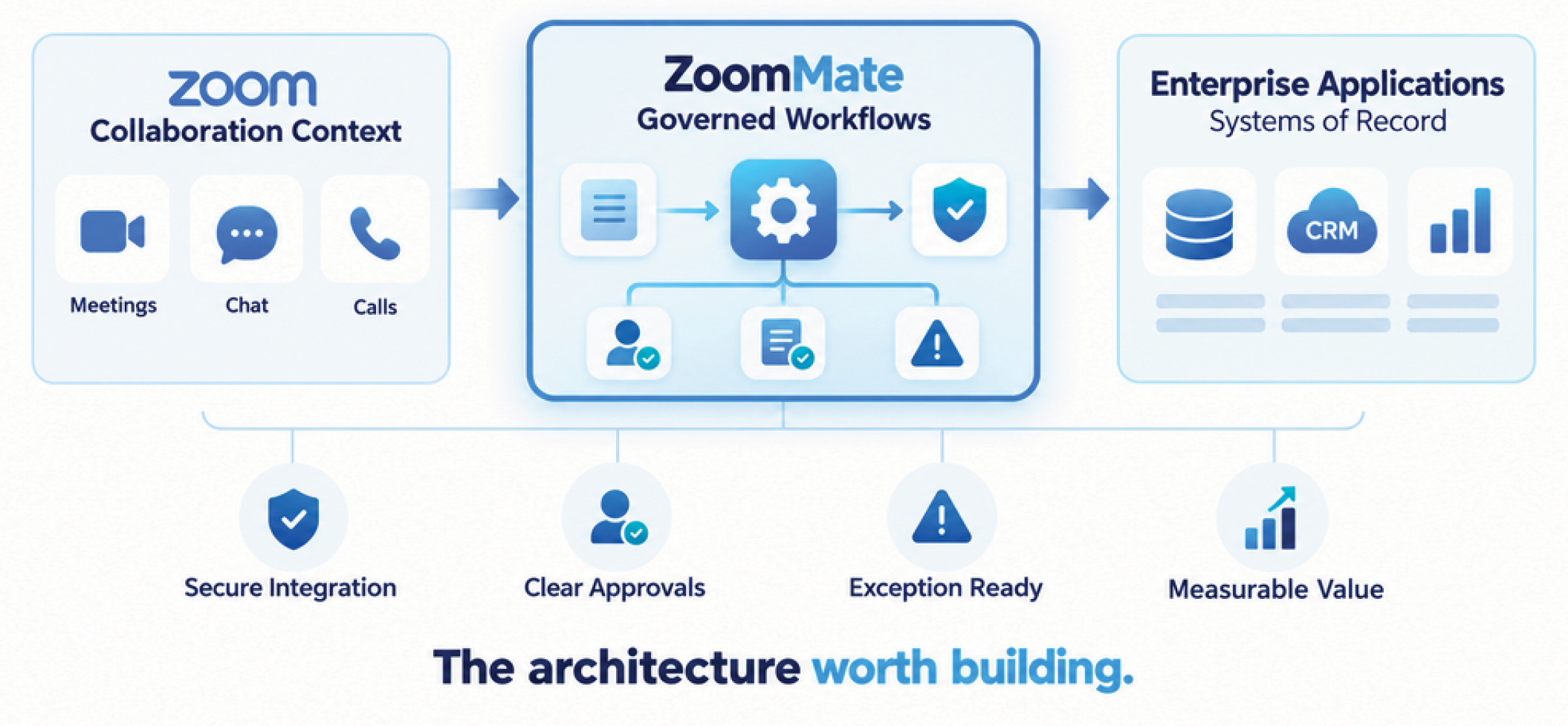
With Zoom supplying collaboration context, ZoomMate coordinating governed workflows and enterprise
applications preserving records, organizations can reduce manual handoffs and improve responsiveness.
A compelling technical implementation proves more than task automation: it demonstrates secure
integration, clear approvals, supportable exception paths and measurable value.
From conversation to execution—that is the architecture worth building.
Request for Services
Find out more about how we can help your organization navigate its next. Let us know your areas of interest so that we can serve you better